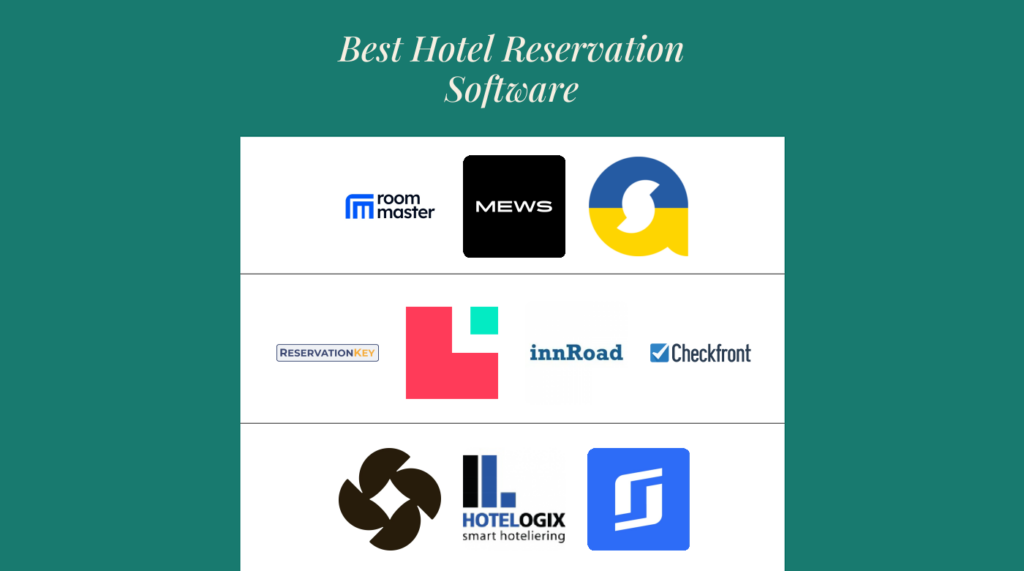

Hotel reservation software eliminates double bookings and streamlines guest scheduling, which frees up your team to craft memorable guest experiences that drive repeat business. Managing fluctuating occupancy rates can be challenging, but the proper inventory tools boost booking accuracy and improve room availability tracking.
In this article, I compare and review the best hotel reservation tools to support your buying decision.
Why Trust Our Software Recommendations
6,700+
Reviews
20
Industry experts
16+
Evaluation factors
14
Years
Our team has been testing and reviewing software since 2012. As hospitality leaders ourselves, we know how difficult—and important—it is to choose the right software.
For this guide, we evaluated tools using hands-on testing and independent research, scoring tools using our selection criteria.
Our reviews reflect our human editorial judgment, not a sales pitch.
Hotel Reservation Software Comparison Table
| Tool | Best For | Trial Info | Price | ||
|---|---|---|---|---|---|
| 1 | Best for efficient reservation management | Free demo available | Pricing upon request | Website | |
| 2 | Best for automation-first reservations | Free demo available | Pricing upon request | Website | |
| 3 | Best for custom reservation system development | Free demo available | Pricing upon request | Website | |
| 4 | Best for user-friendly reservation interface | 30-day free trial | From $37/month | Website | |
| 5 | Best for real-time reservations | Free trial available | From $14/user/month | Website | |
| 6 | Best for end-to-end hotel management | Free demo available | Pricing upon request | Website | |
| 7 | Best for multi-property management | Free demo available | From $99 per month + 3% online booking fee | Website | |
| 8 | Best for owner-driven reservation management | Free demo available | Pricing upon request | Website | |
| 9 | Best with personalized guest CRM | Free demo available | Pricing upon request | Website | |
| 10 | Best for property management and distribution | Free trial + free demo available | From $3.99/month (billed annually) | Website |


Best Hotel Reservation Software Reviews
 Best for efficient reservation management
- Free demo available
- Pricing upon request
Visit WebsiteCustomer Rating:4.3/5
roommaster's guest management interface allows hotel staff to view and manage guest details effectively. Roommaster caters to independent hotels, motels, and resorts by integrating reservation management, front desk operations, and revenue intelligence into one user-friendly platform. Its features like AI-driven tools and mobile check-in are designed to improve guest experiences and optimize operational tasks. Roommaster is ideal for hoteliers looking for a reliable solution to manage their property efficiently.
Why I Picked roommaster:
I picked roommaster for its exceptional ability to improve reservation management through features like real-time booking updates and AI-powered revenue optimization. These functionalities not only enhance operational efficiency but also allow you to respond swiftly to market demands, ensuring your pricing remains competitive. Additionally, roommaster's automated guest communication tools personalize the guest experience by sending timely confirmations and updates, reducing the workload on your staff. Its capability to facilitate commission-free direct bookings further solidifies its position as an ideal choice for hotel operators aiming to maximize both efficiency and profitability.
roommaster Key Features
In addition to its prowess in reservation management, roommaster offers an array of features that further enhance hotel operations:
- Housekeeping Management: This feature allows your team to coordinate cleaning schedules and track room status updates seamlessly.
- Front Desk Operations: Simplifies guest check-ins and check-outs, offering your staff an intuitive interface to manage daily front desk tasks.
- AI Concierge: Provides personalized recommendations and booking opportunities to guests, enhancing their overall stay experience.
- Mobile Guest App: Empowers guests to use their mobile devices for services like check-in, room service requests, and more, increasing convenience and satisfaction.
roommaster Integrations
Integrations include AdriaScan, Amadeus, Flip.to, H&L POS, HOTELITIX, STAAH, Sage, TRIPTEASE, ampliphi, and 3CX.
Pros and Cons
Pros:
- Seamless integration with OTAs for inventory management
- AI Concierge offers personalized guest recommendations
- Mobile Guest App improves guest convenience and satisfaction
Cons:
- Change Journal feature resets after check-in, causing inefficiencies
- Some users report outdated interface compared to competitors
Learn more about roommaster: 2Best for automation-first reservations
Mews
- Free demo available
- Pricing upon request
Visit WebsiteCustomer Rating:4.6/5
Mews displays real-time room availability, rates, and booking details in a single screen to simplify creating new reservations. Managing reservations with Mews gives you a clearer, faster way to handle bookings without jumping between screens or sorting through hard-to-read spreadsheets. It’s built for hotels and multi-property groups that want automated workflows, mobile accessibility, and an interface that helps staff stay focused on guests rather than searching for information.
Why I Picked Mews
I picked Mews because its automation-focused reservation tools reduce the most time-consuming parts of managing bookings, from finding guest details to assigning rooms and processing payments. You get a dynamic timeline that updates availability by the hour, day, or month, paired with one-click space optimization that removes guesswork from room assignments. I also like how smart guest profiles and embedded payments sit directly within the reservation workflow, so your team doesn’t need separate systems to confirm details or complete charges.
Mews Key Features
In addition to its standout features, Mews provides a suite of additional functionalities that enhance hotel operations:
- Housekeeping Software: Streamlines room maintenance and task management, ensuring your team operates efficiently.
- Virtual Concierge: Offers guests digital assistance for inquiries and service requests, improving guest interaction and satisfaction.
- Bulk Reservation Updates: Allows you to edit and apply changes across large groups in a single action.
- Group Billing: Consolidates charges for group stays so you can view and manage all related invoices in one place.
Mews Integrations
Integrations include Booking.com, Expedia, SiteMinder, Amadeus iHotelier, SALTO KS, 24SevenOffice, Adyen, Lightspeed, Mailchimp, and Stripe, and an open API is available for custom integrations.
Pros and Cons
Pros:
- Guest profiles centralize history for personalized service.
- Digital check-in tools shorten lobby wait times.
- Automation reduces repetitive reservation and front-desk work.
Cons:
- Switching from legacy PMS systems usually needs guided onboarding.
- Advanced features may feel overwhelming for small properties.
Learn more about Mews: Best for custom reservation system development
- Free demo available
- Pricing upon request
Visit WebsiteCustomer Rating:4.8/5
Image 2: AltexSoft hotel reservation software interface AltexSoft is a technology and solution consulting company specializing in creating custom reservation systems for hotels. It stands out for its ability to tailor-make reservation solutions that cater to unique hotel needs, which justifies its unique selling proposition as the best tool for custom reservation system development.
Why I Picked AltexSoft: I picked AltexSoft for its dedicated approach to developing custom-made solutions. The tool differentiates itself with its customization capabilities, helping hotels to have a reservation system that fits their unique needs perfectly. This personalized approach to system development makes AltexSoft the best for this use case.
Standout features & integrations:
Features include feature-rich, custom reservation systems, including capabilities for inventory management, real-time room availability tracking, and integration with payment gateways (debit/credit card).
Integrations include key hotel technology providers to ensure a smooth workflow.
Pros and Cons
Pros:
- Emphasis on real-time data and availability tracking
- Integration with major hotel tech providers
- Highly customizable reservation systems
Cons:
- Time-consuming implementation process due to custom development
- Might be overkill for small businesses with simpler needs
- Pricing is not transparent upfront
Learn more about AltexSoft: Best for user-friendly reservation interface
- 30-day free trial
- From $37/month
Visit WebsiteCustomer Rating:4.9/5
Image 12: Reservation Key hotel reservation software interface Reservation Key is a hotel reservation software that offers a host of booking management tools. Its interface is notably user-friendly, making it an excellent choice for those prioritizing ease-of-use in a reservation interface.
Why I Picked Reservation Key: In selecting Reservation Key for this list, what stood out to me was its simple yet effective interface. The usability factor played a pivotal role in my decision. I determined it to be the best user-friendly reservation interface because it simplifies the booking management process without sacrificing functionality.
Standout features & integrations:
Features include its online booking engine, property management system, and automated emails.
Integrations include platforms like Airbnb, Booking.com, and Expedia, which add considerable value for users.
Pros and Cons
Pros:
- Integration with major booking platforms
- Comprehensive booking management tools
- User-friendly interface
Cons:
- Design customization is limited
- Customer support could be improved, according to some users
- Lacks some advanced features found in other tools
Learn more about ReservationKey: Best for real-time reservations
- Free trial available
- From $14/user/month
Visit WebsiteCustomer Rating:4.5/5
Lodgify supports multi-property management, enabling you to oversee various properties from a centralized dashboard. For hotel owners and managers looking for a reliable reservation software solution, Lodgify offers a compelling choice. Tailored for small to medium-sized properties, this software simplifies operations with its user-friendly booking engine and integration with major platforms like Airbnb and Booking.com. Lodgify enhances your brand's online presence with customizable website templates and ensures efficient guest communication and multi-property management.
Why I Picked Lodgify:
I picked Lodgify for its exceptional ability to create a customized booking website, which is crucial for hotel managers aiming to enhance their brand's online presence. The platform offers an integrated website builder that allows you to design a professional, brand-aligned site, ensuring your property stands out in the competitive hospitality market. It also features an automated guest communication system, which can significantly improve guest satisfaction by streamlining interactions and ensuring timely responses. Additionally, Lodgify supports centralized management for multiple properties, making it an ideal choice for those managing several listings and seeking operational efficiency.
Lodgify Key Features
In addition to its website creation capabilities, Lodgify offers a range of features that can enhance your hotel's reservation management experience.
- Channel Manager: This feature automatically updates your availability and rates across all connected booking channels, reducing the risk of double bookings.
- Payment Processing: Lodgify integrates with various payment gateways, allowing you to securely process online payments from guests.
- Reservation System: Manage bookings from a centralized dashboard that provides real-time updates on reservations, cancellations, and guest details.
- Analytics and Reporting: Access comprehensive reports and analytics to gain insights into your property's performance, helping you make informed business decisions.
Lodgify Integrations
Integrations include Stripe, Mailchimp, Google Analytics, QuickBooks Online, WordPress, WhatsApp, Webflow, Shopify, Telegram, SMS Alert, Push by Techulus, and Ziper.
Pros and Cons
Pros:
- Scalable plans starting very low for 1–5 properties
- Solid channel manager syncing OTAs and your site
- Intuitive website builder for direct bookings
Cons:
- For large portfolios: the per‑unit cost rises steeply
- Entry plan has booking‑fee added which raises cost
Learn more about Lodgify: Best for end-to-end hotel management
- Free demo available
- Pricing upon request
Visit WebsiteCustomer Rating:4.5/5
innRoad is a feature-rich hotel management platform offering a broad array of tools from booking to billing. For those managing independent hotels, inns, or BnBs, innRoad presents a cloud-based solution designed to simplify your operations and boost revenue. Its user-friendly interface and dedicated customer support can help you increase direct bookings and improve efficiency. With seamless integration to major online travel agents, innRoad enhances your property's visibility, ensuring more reservations and supporting the growth of your business.
Why I Picked innRoad:
I picked innRoad for its exceptional ability to manage all aspects of hotel operations from one centralized platform, making it ideal for end-to-end hotel management. The software's integrated channel manager ensures real-time updates across direct booking engines and OTAs, minimizing the risk of double bookings and maximizing occupancy rates. Its built-in reservation management system consolidates all booking details, allowing you to focus more on enhancing guest experiences rather than administrative tasks. Additionally, innRoad's online check-in and payment processing features simplify the guest journey, reducing manual errors and improving overall efficiency.
innRoad Key Features
In addition to its end-to-end management capabilities, innRoad offers several features that make it a solid choice for hotel reservation software.
- Guest Profiles: Access detailed guest information to personalize service and enhance the guest experience.
- Real-Time Inventory Management: Automatically updates room availability to prevent double bookings, offering custom room classes and rates.
- Channel Manager: Syncs rates and availability in real-time across direct booking engines and OTAs, ensuring accurate and up-to-date information.
- Online Check-in: Facilitates contactless self-check-in, saving time for both staff and guests while enhancing convenience.
innRoad Integrations
Integrations include Expedia, Booking.com, Airbnb, Google Hotel Booking Links, point of sale systems, door locks, payment gateways, and hundreds of online travel agencies.
Pros and Cons
Pros:
- Extensive integration capabilities with OTAs and other platforms
- Simplified front‑desk & housekeeping workflow for small/mid‑size properties
- Strong booking engine that boosts direct bookings
Cons:
- Interface and customization can feel outdated or limited
- Mobile app version lacks full feature parity and has bugs
 Best for multi-property management
- Free demo available
- From $99 per month + 3% online booking fee
Visit WebsiteCustomer Rating:4.5/5
Image 7: Checkfront hotel reservation software interface Checkfront is a cloud-based business management software focused on simplifying the complexities of managing multiple properties. Given its comprehensive set of features and functions tailored for multi-location businesses, it excels in this niche.
Why I Picked Checkfront: In making my selection, I compared various tools for their capacity to handle multi-property management. Checkfront stood out due to its comprehensive approach to this challenge, offering robust features that cater to this specific need. If you're managing multiple properties and looking for a tool to streamline the process, Checkfront would be a good choice.
Standout features & integrations:
Features include its centralized online hotel booking system, inventory management, and robust reporting capabilities.
Integrations include a host of global OTAs, social media platforms, and payment gateways, expanding its reach and utility.
Pros and Cons
Pros:
- Numerous integrations with OTAs, payment gateways, and social media platforms
- Robust reporting capabilities
- Comprehensive multi-property management features
Cons:
- Customer service could be improved
- Setup requires a considerable amount of time
- The interface can be slightly complicated for beginners
Learn more about Checkfront: Best for owner-driven reservation management
- Free demo available
- Pricing upon request
Visit WebsiteCustomer Rating:4.3/5
OPERA Cloud dashboard provides a comprehensive overview of hotel operations. For hoteliers seeking a reliable and innovative solution to manage their properties, OPERA Cloud offers a cloud-based Property Management System that integrates with your hotel's operations. Designed to enhance guest satisfaction and streamline management processes, OPERA Cloud provides real-time insights and customizable features that can be accessed from anywhere, ensuring your team can manage reservations and guest preferences. This system is ideal for hoteliers aiming to optimize operational efficiency while providing exceptional guest experiences.
Why I Picked OPERA Cloud:
I chose OPERA Cloud for its focus on owner-driven reservation management, making it ideal for hoteliers who want more control over their operations. With features like centralized guest profiles, you can tailor services to individual preferences, enhancing guest satisfaction. The intuitive booking management system allows you to optimize rates and packages while also offering upgrades and add-ons, which can boost your revenue. Additionally, the advanced reporting and analytics tools provide real-time insights, allowing you to make informed decisions and improve overall operational efficiency.
OPERA Cloud Key Features
In addition to the owner-driven reservation management capabilities, OPERA Cloud offers a range of features designed to enhance your hotel operations.
- Mobile Accessibility: Allows your front desk staff to access the system on tablets or smartphones, increasing mobility and efficiency in guest service.
- Loyalty Program Management: Facilitates the creation and management of loyalty programs to incentivize repeat bookings and enhance guest satisfaction.
- Integrated Payment Solutions: Offers secure, contactless payment processing options, ensuring a seamless transaction experience for your guests.
- Vacation Ownership Management: Supports mixed-use properties by managing rentals and optimizing operational efficiency, making it ideal for resorts and vacation properties.
OPERA Cloud Integrations
Integrations include Post It mini point-of-sale, Oracle Payment Interface, Oracle Payment Cloud Service, and mobile guest experience support.
Pros and Cons
Pros:
- Detailed guest profile & centralized data support personalised service and marketing
- Strong integration capabilities with third‑party systems and APIs
- Comprehensive hotel operations coverage in a single platform
Cons:
- Steep learning curve and complexity due to wide feature‑set
- High cost making it less suitable for very small or independent properties
Learn more about OPERA Cloud: Best with personalized guest CRM
- Free demo available
- Pricing upon request
Visit WebsiteCustomer Rating:4.3/5
Cloudbeds hotel reservation software interface Cloudbeds brings together everything you need to manage your hotel operations, helping you focus on delivering exceptional guest experiences. Whether you're a small boutique hotel or a large chain, Cloudbeds integrates property management, revenue management, and marketing tools into one intuitive platform. It tackles the complexities of reservations and pricing, allowing you to concentrate on what truly matters: your guests.
Why I Picked Cloudbeds:
I picked Cloudbeds because it excels in providing a seamless reservation management experience, essential for any hotelier. Its intuitive calendar allows you to manage room availability and rates efficiently, eliminating the hassle of overbookings. This platform also offers real-time insights through built-in reporting and analytics, empowering you to make informed decisions that enhance your hotel's performance. Furthermore, Cloudbeds' robust channel management system ensures efficient distribution across over 300 platforms, helping you reach a broader audience and optimize occupancy rates.
Cloudbeds Key Features
In addition to its seamless reservation management, Cloudbeds offers a variety of features to enhance your hotel's operations.
- Guest Experience Platform: This feature facilitates guest communication and engagement through automated messaging, personalized offers, and real-time feedback collection.
- Payment Processing: Simplifies payment operations by supporting various payment methods and enhancing security with centralized fraud tools and PCI compliance.
- Hotel CRM Software: Integrates guest data into marketing workflows for personalized communication and loyalty building.
- Dynamic Pricing: Automatically adjusts rates based on demand, potentially increasing revenue by 15-20% in the first year.
Cloudbeds Integrations
Integrations include Mailchimp, Xero, HubSpot, WordPress, Quo, Discord, ActiveCampaign, Jotform, monday.com, Slack, Salesforce, and Google Sheets.
Pros and Cons
Pros:
- Direct‑booking engine supports multiple languages & currencies
- Strong channel‑manager avoids over‑bookings across OTAs
- Unified system for reservations PMS and channels
Cons:
- Some third‑party integrations or niche tools may not sync optimally
- Reporting tools have limited customization or depth
 Best for property management and distribution
- Free trial + free demo available
- From $3.99/month (billed annually)
Visit WebsiteCustomer Rating:4.4/5
Image 11: Hotelogix hotel reservation software interface Hotelogix is a cloud-based hotel management system that integrates various aspects of hotel operations, such as front desk, POS, and housekeeping, into one platform. It also features a comprehensive distribution system, making it an excellent choice for hotels requiring efficient property management and distribution.
Why I Picked HotelLogix: In choosing tools for this list, I was impressed by Hotelogix's combination of property management features and distribution capabilities. Its two-pronged functionality is unique among the tools I considered, which is why I determined it to be the best for property management and distribution.
Standout features & integrations:
Features include a robust property management system, distribution capabilities, and a unified hotel operations platform.
Integrations include Booking.com, Expedia, and TripAdvisor, making room distribution and management more streamlined.
Pros and Cons
Pros:
- Integration with major booking platforms
- Efficient distribution capabilities
- Comprehensive property management system
Cons:
- Some users have noted occasional system lags and bugs
- The starting price might be higher than more single-function tools
- The breadth of features may introduce a steep learning curve
Learn more about Hotelogix:
When to Use Hotel Reservation Software
Hotel reservation software manages your bookings, room availability, and guest data in one place, so your team spends less time firefighting and more time delivering a great stay. If any of these scenarios sound like your day-to-day, it's worth adding one to your stack:
- You're tracking availability across spreadsheets and email: Say you're managing a 40-room boutique property and relying on a shared Google Sheet to log reservations. Mistakes happen, and a single double-booking during peak season can cost you a guest for life. Reservation software syncs availability in real time, eliminating that risk entirely.
- Your team is manually updating rates across Booking.com, Expedia, and your own site: Logging into three OTA extranets every time you adjust pricing eats up hours each week. A reservation system with a channel manager pushes rate changes everywhere at once, saving time and preventing rate parity issues.
- It's taking too long to confirm bookings and send guest communications: If guests are waiting hours for a confirmation email because someone has to send it manually, you're losing trust before check-in even begins. Automated confirmations go out instantly, keeping guests informed without adding to your team's workload.
- Managing no-shows and cancellations is creating revenue gaps: Without a system enforcing your policies automatically, applying cancellation fees or holding deposits falls through the cracks. Reservation software handles policy enforcement at the time of booking, so you recover revenue you'd otherwise lose.
- You have more than one property and no single view of occupancy: Juggling separate systems for two or more locations means you're always piecing together the full picture. A centralized reservation platform gives you a live dashboard across all properties, so you can make smarter staffing and pricing decisions fast.
Other Hotel Reservation Software
Below is a list of additional hotel reservation software that I shortlisted, but did not make it to the top 10. Definitely worth checking them out.
- 11SiteMinderBest for high-conversion booking technology
- 12SkyTouchBest for cloud-based hotel operations
- 13Little HotelierBest for small hotels and B&Bs
- 14Clock PMS+Best for group reservations & complex booking needs
- 15SevenRoomsBest for personalized guest experiences
- 16RezstreamBest integrated accounting system
- 17HospitableBest for automated guest communication
- 18HoteligaBest for multi-property management
- 19Hotel EngineBest for large group bookings
- 20mini HotelBest for automated transactional emails
- 21HiJiffyGood for AI-powered guest communication
- 22GraceSoftGood for scalable solutions and integration with OTAs
- 23Amadeus CRSGood for large hotels in need of centralized reservation systems
- 24IQwareGood for its comprehensive central reservation system
- 25Infor HMSGood for its versatile hospitality management suite
- 26Rate HawkGood for access to competitive hotel rates
- 27Stayntouch PMSGood for contactless check-in and check-out processes
How I Evaluate Hotel Reservation Software
I split my evaluation into what a tool must do—like syncing live availability across OTAs and capturing direct bookings—and what makes one option a better fit than another for your property.
Core Functionality (Table Stakes For This List)
When I'm selecting tools for my list, I rank each one on a scale from 0 (does not offer the functionality) to 5 (excels in this area) for each core functionality listed below. Then, I calculate the tool's total score into a percentage. Each tool needs to achieve a minimum total score of 65% to be considered for inclusion.
- Direct Booking Engine: I check whether the tool provides an embeddable booking widget for your hotel website, and whether it supports branding, mobile optimization, and multi-currency options.
- Channel Manager Integration: Real-time two-way sync with OTAs like Booking.com and Expedia is what I evaluate here, along with how many channels are supported natively.
- Real-Time Inventory & Rate Control: I look at how each platform handles rate plan creation, availability updates, and stay restrictions like minimum-night rules across all connected channels.
- Reservation Management Dashboard: A centralized calendar where your front desk can view, create, modify, and cancel bookings matters—I evaluate how intuitive the layout is for daily operations.
- Integrated Payment Processing: I look for PCI-compliant payment capture at the point of booking, including deposit collection and card tokenization, since guests expect a secure checkout flow.
- Automated Guest Communications: Triggered confirmations, cancellation notices, and pre-arrival emails tied to reservation events are what I evaluate, along with template customization and branding support.
Once I have a list of tools that meet this criteria, I consider what sets each platform apart.
Differentiating Factors (What Sets Vendors Apart)
Here's how I compare and contrast different vendors:
Standout Features
I look for a dynamic pricing engine that adjusts rates based on occupancy and local demand, since manual rate updates drain time during peak seasons. Metasearch connectivity to Google Hotel Ads and Trivago is another differentiator—it lets your property compete for direct bookings right where travelers are searching. I also evaluate whether the platform includes upsell tools that let guests add extras like breakfast or early check-in during the booking flow, which directly ties to ancillary revenue.
Beyond Features
Pricing structure matters—I check whether a vendor charges a flat monthly fee or takes a commission per booking, since that difference shapes long-term costs as your occupancy grows. PMS integration is another key factor. A reservation tool that syncs bi-directionally with systems like Cloudbeds, Mews, or Opera keeps your front desk from juggling duplicate data. I also evaluate onboarding support, particularly how quickly a vendor can map your OTA channels and get you live, because downtime during migration means lost bookings.
What is Hotel Reservation Software?
Hotel reservation software is a system that manages room bookings, availability, and guest information in real time. It's used by front desk staff, managers, and reservation agents to prevent overbookings, reduce manual errors, and speed up check-ins. This software helps solve key pain points like inconsistent inventory tracking, time-consuming booking processes, and poor guest communication.
What Are the Benefits Of Using Hotel Reservation Software?
There are a number of benefits to using hotel reservation software, including:
- Increased Efficiency: The software can automate many tasks, such as check-in and check-out, sending reminders to guests, and generating reports. This means that your staff can spend more time attending to guests’ needs and less time on administrative tasks.
- Streamlined Operations: The software provides a single system for all your hotel operations, from reservations to billing. This means that there is less chance for mistakes and that all your data is in one place.
- Better Guest Experiences: The software can provide guests with up-to-date information about their reservations, such as room number and dining options. It can also send them reminders about their reservations and provide them with directions to the hotel.
- Greater Cost Savings: Automated tasks such as check-in and check-out can save staff time and reduce the need for overtime. In addition, the software can automate invoicing and reduce the need for human error.
How Much Does Hotel Reservation Software Cost?
That depends on the software. Some are expensive, while others are more affordable. Generally, you can expect to pay anywhere from $500 to $2,000 for a good quality program.
When shopping for hotel reservation software, be sure to consider the features that are important to you. Is customer support a must-have? How about online booking? Do you need the ability to manage multiple properties? Weigh your needs against the cost of the software to find the best fit for your business.
What Are the Key Features To Look For When Buying Hotel Reservation Software?
When you're shopping for hotel reservation software, it's important to keep the following features in mind:
- Ease of use: The software should be easy to navigate, so you can find the information you need quickly and easily.
- Customizable: The software should be customizable to meet your specific needs and requirements.
- Scalability: The software should be able to grow with your business, so you don't have to upgrade or replace it as your business expands.
- Reporting capabilities: The software should include robust reporting capabilities so you can track your business performance and see how you're doing.
- Integration capabilities: The software should be able to integrate with other systems, such as your accounting system, so you can get a complete picture of your business operations.